


Cyprus often tells a story about itself as a player in the region, a responsible EU member punching above its weight, a neutral bridge-builder, a haven of stability, a platform for humanitarian outreach. It’s a narrative that gains traction in times of regional crisis, offering a sense of purpose and relevance on the international stage. But how does that image hold up against geopolitical reality? And how can small states extract gains, diplomatic visibility, strategic access, and national leverage, in a world where major powers cannot escape the gravity of their own interests?
In interviews with Andreas Mavroyiannis, former negotiator and UN ambassador, Anna Koukkides-Procopiou, political analyst and member of the Cyprus Forum’s advisory board, as well as two former senior Western diplomats, who requested anonymity, our interlocutors, all seasoned observers, explore the enduring tension between aspiration and limitation, narrative and reality, and the risks of believing too much in one’s own myth.
Cyprus: A Host in a Fragile Neighborhood
Due to its geographic position, Cyprus has adopted a role as a diplomatic channel in the Middle East and the Mediterranean. At the crossroads of Europe, Asia, and Africa, the island has served as a meeting point of civilizations, a commercial hub, and a bridge of peace.
Cyprus’ current official narrative in the context of the latest Middle East crisis in the region includes:
- The “Amalthea” plan for humanitarian aid to Gaza
- Cyprus as a channel between Israel, Arab states, and Iran
- Willingness to host discreet, backchannel talks
- Participation in energy projects and EU visibility
According to the Spokesperson of the Ministry of Foreign Affairs, Theodoros Gotsis Cyprus’ ability to contribute to regional security stems from a combination of factors: its geographic location, its status as a Member State of the European Union, and the clear orientation of its foreign policy in recent years. At the same time, as a member of the international community, Cyprus shares the responsibility for promoting security and stability in the region, as well as providing humanitarian assistance, within the limits of its capabilities.
Commenting on the country’s broader regional engagement, the MFA Spokesperson noted that particular attention has been given to strengthening ties with neighboring countries, especially within the Arab world. Beyond the historical depth of these relationships, bilateral contacts and high-level meetings have intensified in recent years, both by the President of the Republic and the Minister of Foreign Affairs. A recent example of this cooperation, he said, was the prompt response by the United Arab Emirates in providing additional desalination units, as well as the close coordination on humanitarian efforts.
On the “Amalthea” initiative, the Spokesperson stressed that establishing the framework for the direct transfer of humanitarian aid from Cyprus to Gaza was neither simple nor automatic. The mechanism remains operational and in a state of readiness. As he explained, significant quantities of humanitarian aid are already in storage, awaiting the appropriate conditions for delivery. Cooperation continues with both the UAE and the United Nations, particularly in relation to the special fund created to support this ongoing effort.
The narrative presents Cyprus as a responsible EU member punching above its weight, projecting neutrality, stability, and humanitarian outreach. But is this realistic within the broader geopolitical reality? Cyprus remains small, economically dependent, militarily limited, and politically vulnerable due to its division and the continued Turkish occupation. Overstating its role risks creating unrealistic expectations, exposing strategic overreach, and masking the constraints that still define its regional standing.
Should Cyprus embrace its role as a “safe harbor” with pride, without over-publicizing it? Greater diplomatic caution, low-profile contributions, and strategic subtlety might build its credibility as a serious, constructive actor.
“If Cyprus Didn’t Exist…”
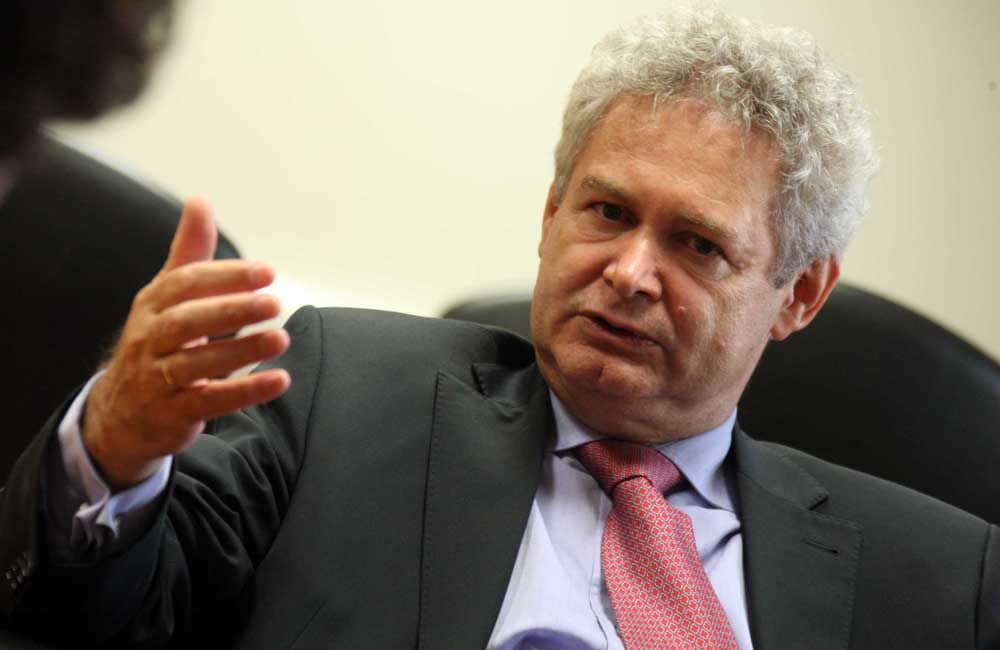
Former Ambassador Andreas Mavroyiannis believes Cyprus must claim a role, responsibly, amid growing regional tensions. Cyprus has historically helped in crises, evacuations, and mediations, but must do so quietly and efficiently. Otherwise, initiatives risk failure.
He points to the "Amalthea" initiative, noting that despite its heavy promotion, its impact was minimal and it drew criticism as a political distraction, or even as tacit complicity in Israel’s operations in Gaza. Good intentions in times of crisis are commendable, he argues, but not when they are reduced to public relations efforts and the instrumentalization of human suffering.
Its unique geography and long tradition of hospitality make Cyprus a vital hub, Mavroyiannis says. He remembers once pointing out to a foreign official that “if Cyprus didn’t exist the big players would have to invent it”. And this is because Cyprus could really enable East-West dialogue, coordination, and offers understanding of regional dynamics that can enrich EU and international decision-making. This isn’t a marginal role, he says, it can be pivotal.
Some argue Cyprus should use crises to press for progress on the Cyprus Problem. But is that realistic amid regional conflict? In practice, Cyprus secures statements, not breakthroughs. But for Cyprus, Mavroyiannis argues, even statements by big powers can be important and this is why Cyprus must act with consistency and not shallow communications. The right approach, he added, can build political capital, receive support in EU matters, recognition of difficult decisions, and friendships in integration debates.
Mavroyiannis describes this as “vital space”, a framework the Republic of Cyprus has to carve out so that it can manage its own affairs, take initiative, and assert itself independently.
“This space is existential. It allows Cyprus to operate with dignity and to be seen as a credible, respectful, and dependable partner. That is both duty and ambition”, Mavroyiannis says, noting that such expanded margins are critical for any future Cyprus solution, keeping UN interest alive and differentiating Cyprus from other "frozen conflicts."
That has value in diplomacy, but the impact is often overstated. The island is useful, not central, it offers access and stability, but it doesn’t shape events. Its role is strategic, not transformative.