

Ceasefire Under Pressure After US–Iran Exchanges of Fire in the Strait of Hormuz
The ceasefire between the United States and Iran is now under serious strain, after exchanges of fire on Monday in the strategically important Strait of Hormuz and the resumption of Iranian attacks against one of its Gulf neighbours, the United Arab Emirates. The sharp escalation, which further tests the ceasefire in force since 8 April, followed an announcement by US President Donald Trump that an American military operation would be conducted to restore traffic through the Strait, which Iran has effectively shut down. According to Fox News, President Trump warned that Iranians would be pulverised and “wiped off the face of the Earth” if they target US warships. Strait of Hormuz and Market Shock Since the outbreak of the war involving the United States and Israel against Iran, which has cost the lives of thousands of people, most of them in the Islamic Republic and Lebanon, Tehran has imposed tight controls over the Strait of Hormuz. In peacetime, about one fifth of the world’s oil and liquefied natural gas passes through the strait. Around 20,000 sailors are currently stranded in the area, according to a senior official of the UK Maritime Trade Operations agency. The attacks, the first on civilian installations in a Gulf country in over a month, rattled markets, sending oil prices sharply higher. An oil facility in Fujairah, one of the few accessible in the region without passing through the strait, was hit by a drone that caused a fire. Three Indian nationals were injured, though not seriously, according to local authorities. The UAE also reported being targeted by four cruise missiles launched from Iran, three of which were intercepted while one fell into the sea, according to the defence ministry. A crude oil tanker belonging to national oil company ADNOC was also targeted by two Iranian drones. The country condemned the “dangerous escalation” and said it reserves the right to retaliate. ‘No Military Solution’ Iran’s state television said the Islamic Republic “had no plan to target the Emirates,” citing an unnamed senior officer, who condemned the consequences of what he described as “US military adventurism.” He was referring to the operation aimed at freeing commercial vessels trapped in the Gulf via the Strait of Hormuz. European Commission President Ursula von der Leyen condemned what she called a “clear violation of [UAE] sovereignty and international law” by Iran and expressed solidarity with “the people of the Emirates.” British Prime Minister Keir Starmer also condemned the attack and called for de‑escalation, while Saudi Arabia warned against further 'military escalation' and urged continued diplomatic efforts. In Oman, two people were injured in an attack on a property in Bukha in the Strait of Hormuz, according to state media. "Events in the Strait of Hormuz make it clear that there is no military solution to a political crisis,” Iran’s Foreign Minister Abbas Araghchi wrote on X. He called on the United States to pursue diplomacy and not be drawn into “another dead end.” Conflicting Claims and Oil Prices Major differences remain between the two governments, and efforts to restart negotiations have so far failed following an initial, unsuccessful meeting in Islamabad on 11 April. Tehran said on Sunday it had received a response to its latest proposal on ending the war, though no details have been made public. Iran, which has imposed de facto transit fees in the strait, warned the United States against any intervention. If US forces approach or attempt to enter, they will be targeted, Iran’s chief of staff, General Ali Abdollahi, said. President Trump again reiterated that Iran would not be allowed to acquire nuclear weapons, an ambition Tehran has denied for decades. Two US‑flagged commercial ships passed through the Strait 'successfully,’ according to US Central Command. Its commander, Admiral Brad Cooper, said US forces destroyed six Iranian vessels and intercepted missiles and drones launched from Iran against US warships and commercial shipping. Tehran denied that commercial vessels passed through the strait or that US forces destroyed Iranian boats. South Korea also reported an “explosion” and fire aboard a South Korean vessel in the Strait of Hormuz. Brent crude oil closed on Monday at $114.44 a barrel, up 5.8 per cent. Eurasia Group analysts warned that if the disruption to shipping persists, prices are likely to rise further. Source: CNA

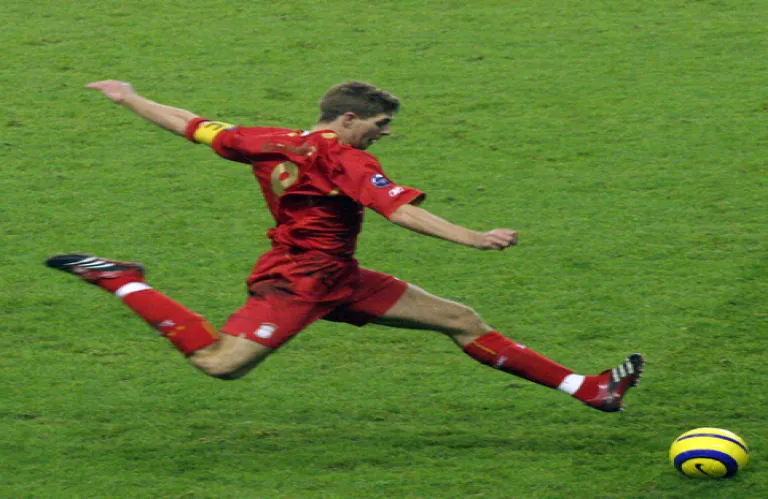
Steven Gerrard is the greatest midfielder in the history of the Premier League
Steven Gerrard (born May 30, 1980) is an English professional football

Lorem Ipsum is simply dummy text of the printing and typesetting industry. Lorem Ipsum has been the industry's standard dummy text ever since the 1500s 04
Lorem Ipsum is simply dummy text of the printing and typesetting industry. Lorem Ipsum has been the industry's standard dummy text ever since the 1500s, when an unknown printer took a galley of type and scrambled it to make a type specimen book. It has survived not only five centuries, but also the leap into electronic typesetting, remaining essentially unchanged. It was popularised in the 1960s with the release of Letraset sheets containing Lorem Ipsum passages, and more recently with desktop publishing software like Aldus PageMaker including versions of Lorem Ipsum. Why do we use it? It is a long established fact that a reader will be distracted by the readable content of a page when looking at its layout. The point of using Lorem Ipsum is that it has a more-or-less normal distribution of letters, as opposed to using 'Content here, content here', making it look like readable English. Many desktop publishing packages and web page editors now use Lorem Ipsum as their default model text, and a search for 'lorem ipsum' will uncover many web sites still in their infancy. Various versions have evolved over the years, sometimes by accident, sometimes on purpose (injected humour and the like). Where does it come from? Contrary to popular belief, Lorem Ipsum is not simply random text. It has roots in a piece of classical Latin literature from 45 BC, making it over 2000 years old. Richard McClintock, a Latin professor at Hampden-Sydney College in Virginia, looked up one of the more obscure Latin words, consectetur, from a Lorem Ipsum passage, and going through the cites of the word in classical literature, discovered the undoubtable source. Lorem Ipsum comes from sections 1.10.32 and 1.10.33 of "de Finibus Bonorum et Malorum" (The Extremes of Good and Evil) by Cicero, written in 45 BC. This book is a treatise on the theory of ethics, very popular during the Renaissance. The first line of Lorem Ipsum, "Lorem ipsum dolor sit amet..", comes from a line in section 1.10.32. The standard chunk of Lorem Ipsum used since the 1500s is reproduced below for those interested. Sections 1.10.32 and 1.10.33 from "de Finibus Bonorum et Malorum" by Cicero are also reproduced in their exact original form, accompanied by English versions from the 1914 translation by H. Rackham.
Lorem Ipsum is simply dummy text of the printing and typesetting industry 01
Lorem Ipsum is simply dummy text of the printing and typesetting industry. Lorem Ipsum has been the industry's standard dummy text ever since the 1500s
dsfaasdfasdfas
dsfsafads