




A study assessing accessibility in Paphos as a tourism destination is under way on behalf of the Paphos Regional Tourism Development and Promotion Company (ETAP). It aims to identify gaps and design solutions, and is expected to be completed in mid-2027.
Nassos Chatzigeorgiou, director of ETAP Paphos, told CNA that a scientific team has already been established and that work has begun on creating a mechanism to record infrastructure of both private and public interest.
The study is being conducted on behalf of ETAP by the European University Cyprus, with support from the American University of Beirut. Once completed, it is expected to provide a holistic assessment of the existing situation and a plan for individual actions so that the necessary interventions can begin.
Mr Chatzigeorgiou said that improving accessibility, with the aim of making Paphos even more welcoming to people with mobility and other challenges, is a priority for ETAP. He noted that the company’s approach is not based on fragmented solutions, but on creating a holistic development plan.
ETAP’s strategy is aligned with Paphos’ commitments as a Smart Destination, as well as with the need for a destination that is more welcoming to people with mobility and other challenges.
At the same time, ETAP has adopted European Union principles including non-discrimination and equality, digital inclusion, independent living and autonomy, as well as free movement without exclusion.
The company participates in the European programme “Smart Tourism – Smart Destinations”, together with nine other countries. The programme is 80% co-funded by the European Union and promotes accessibility through the digital transition. ETAP also participates in Interreg Euro-MED through the MED-routes project, which aims to transfer expertise and develop accessible cultural tourism, as well as in the I-DEMO project, which promotes the creation of accessible cultural offerings.
ETAP is also an active member of the European Cultural Tourism Network, which promotes accessibility in tourism.
Accessible beaches and digital tools
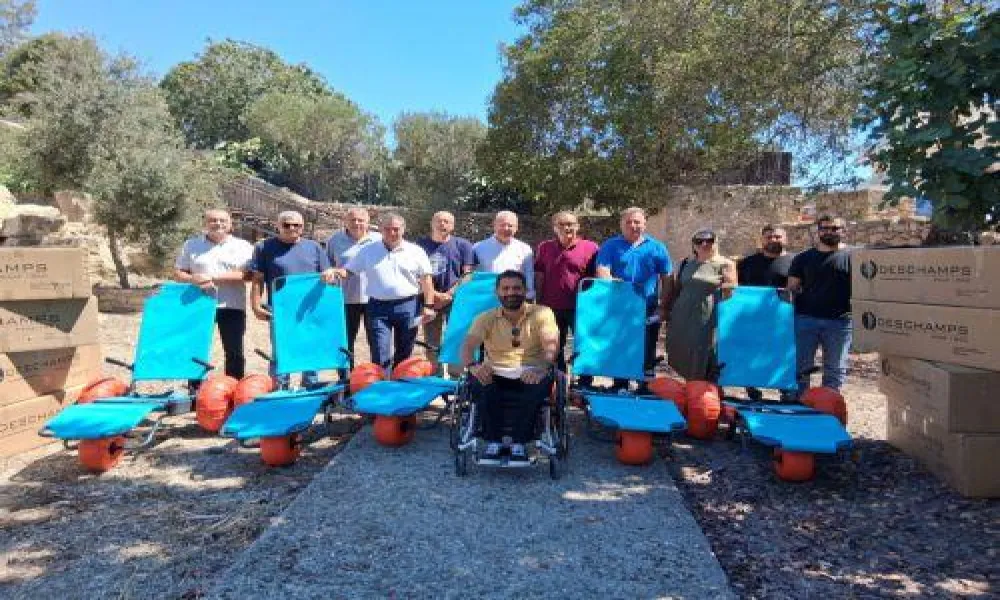
In the area of beaches, ETAP has purchased and delivered special floating wheelchairs for use at public beaches in all municipalities and in various communities across the district.
With the support of the Deputy Ministry of Tourism and through funding programmes, it has also contributed to the construction of accessible ramps and other infrastructure at the beaches of Ierokipia, in Paphos Municipality, for 2026. Efforts to expand the network of accessible beaches are ongoing, covering areas from Timi to the Polis Chrysochous district and Pomos.
Particular emphasis is also being placed on digital accessibility. ETAP has developed and uses QR codes and interactive applications at points of interest, so that information about attractions is available to people with hearing or visual difficulties.
To date, more than 150 smart signs have been created throughout the district, along with two smart touring applications which, according to Mr Chatzigeorgiou, have proved highly successful. Work is also under way on the design of the eighth phase for the creation of smart signs.
Material is also being developed to digitise tours at the Marion-Arsinoe archaeological museum.
Routes and next steps
The upgrading of natural routes and hiking tourism infrastructure is also at the centre of the initiative. Plans are being promoted for the design and upgrading of eco-trails and hiking infrastructure with specifications that facilitate movement for people with mobility difficulties and older people.
Routes friendly to people with mobility challenges have been created and are being promoted within the Kato Paphos archaeological park, so that accessibility is incorporated into the urban, coastal, natural, cultural and walking experiences offered by the destination.
Mr Chatzigeorgiou said the action plan for 2027–2028 would be directly linked to the results of the assessment of the existing situation. Based on the evaluation of infrastructure and services, pressure is expected to increase on the state, local authorities and businesses to create access infrastructure and services at various points across the destination.
Particular efforts are expected to focus on expanding accessibility infrastructure beyond traditional urban and tourism centres, so that rural areas and more remote communities are also covered.
Emphasis will also be placed on digital inclusion, with the aim of making the destination digitally accessible to people with disabilities, older people and those with limited digital skills.
According to the ETAP director, accessibility is being treated as a broader strategy encompassing infrastructure, services, natural and cultural routes, beaches, access to information and the digital experience. The aim is to create an inclusive destination where accessibility is part of the overall planning rather than a series of isolated interventions.
Through its existing actions, European partnerships, the assessment study and the 2027–2028 action plan, ETAP is seeking to lay the foundations for a more comprehensive approach, with accessibility as a key element of tourism development in Paphos district.
Source: CNA